
Valley Forge Baptist Church
  • VFBC Home Page
  • Services/Events
  • Church Newsletter
  • Missions
  • VFBC Blog
  • Sermons & Teaching

Contrasts that Tend in the Same Direction - Hebrews 1

11/7/2022

0 Comments

 
Picture
     The contrasts in the opening verses of Hebrews 1 all seem to head in the same direction.
     “In the past” contrasts with “in these last days.” God spoke “to our forefathers” stands over against the fact that in these last days he has spoken “to us.” In the past God spoke to the forefathers “through the prophets at many times and in various ways.” But in these last days God has spoken to us “by his Son” (1:1–2).
     Indeed, the form of that expression, “by his Son,” in the original, suggests pretty strongly that the author of Hebrews does not think of the Son as one more prophet, or even as the supreme prophet. The idea is not that while in the past the word of God was mediated by prophets, in these last days the word has been mediated by the Son, who thus becomes the last of the prophets. Something more fundamental is at issue. The Greek expression, over-translated, means “in Son.” The absence of the article “the” is significant. Moreover, “in Son” contrasts not only with “through the prophets” but with “through the prophets at many times and in various ways.”
     The point is that in these last days God has disclosed himself in the Son revelation. In the past, when God used the prophets he sometimes gave them words directly (in oracles or visions), sometimes providentially led them through experiences they recorded, sometimes “spoke” through extraordinary events such as the burning bush: there were “many times” and “various ways” (1:1). But now, God has spoken “in Son” - we might paraphrase, “in the Son revelation.” It is not that Jesus simply mediates the revelation; he is the revelation. It is not that Jesus simply brings the word; he is himself, so to speak, the Word of God, the climactic Word. The idea is very similar to what one reads in the Prologue of John’s Gospel. The Son is capable of this because he is “the radiance of God’s glory and the exact representation of his being” (1:3).
     Strictly speaking, then, Christians are not to think of the New Testament books as just like the Old Testament books, bringing the next phase of God’s redemptive plan to us. Mormons argue that that is all they are - and then say that Joseph Smith brought a still later revelation to us, since he was yet another accredited prophet. But the author of Hebrews sees that the climax of all the Old Testament revelation, mediated through prophets and stored in books, is not, strictly speaking, more books - but Christ Jesus himself. The New Testament books congregate around Jesus and bear witness to him who is the climax of revelation. Later books that cannot bear witness to this climactic revelation are automatically disqualified.
0 Comments

Colossians 2:8-10 - Philosophy or Christ? – P1

11/7/2022

0 Comments

 
     Our Sunday Sermon this week was from Colossians 2:8ff where we moved on to see Paul take on these False Teachers endangering the Colossians with a look at the difference between what Philosophy espouses and what is true about the Person and nature of the Lord Jesus Christ!

https://youtu.be/ps3AN6anV68
0 Comments

​How Can God Forget My Sins? - What We Remember at the Table

11/5/2022

0 Comments

 
​“This cup that is poured out for you is the new covenant in my blood” (Luke 22:20).

     It’s beautiful and fitting that the first explicit mention of the new covenant in the New Testament comes from the mouth of Jesus. And he mentions it at the most fitting moment. After sharing his final Passover meal with his disciples, Jesus takes a chalice of wine and says to them,
     There is a world of meaning packed into those words that would change the world.
Great Pivotal Moment
​     Reclining around the table that evening, the disciples were observing from front-row seats a pivotal moment of redemptive history. The great Passover “Lamb of God,” who had come to “take away the sins of the world” (John 1:29), was inaugurating a new-covenant Passover meal of remembrance to go along with his inauguration of the long-awaited new covenant foretold by the prophet Jeremiah (Jeremiah 31:31–34). The author of Hebrews quotes it in full:
Behold, the days are coming, declares the Lord,
when I will establish a new covenant with the house of Israel
and with the house of Judah,
not like the covenant that I made with their fathers
on the day when I took them by the hand to bring them out of the land of Egypt.
For they did not continue in my covenant,
and so I showed no concern for them, declares the Lord.
For this is the covenant that I will make with the house of Israel
after those days, declares the Lord:
I will put my laws into their minds,
and write them on their hearts,
and I will be their God,
and they shall be my people.
And they shall not teach, each one his neighbor
and each one his brother, saying, “Know the Lord,”
for they shall all know me,
from the least of them to the greatest.
For I will be merciful toward their iniquities,
and I will remember their sins no more. (Hebrews 8:8–12)
     It’s unclear how much the disciples grasped at the time. But when Jesus said the cup represented “the new covenant in [his] blood,” he meant he was far more than a Passover lamb whose blood would momentarily shield God’s covenant people from a momentary judgment.
He meant that he had “appeared once for all at the end of the ages to put away sin by the sacrifice of himself” (Hebrews 9:26). He meant that through his shed blood, he would completely achieve what centuries of the shed “blood of bulls and goats” could never achieve (Hebrews 10:4). He meant that his sacrificial death would make it possible for God to “be merciful toward [the] iniquities” of all his covenant people, for all time, and “remember their sins no more.”
 
Why the Old Covenant Became Obsolete
     By all accounts, Christianity is now one of the world’s great religions, distinct from Judaism. But to Christianity’s Founder and the first generation or two of his followers, what we call “Christianity” was Judaism. It was Judaism with its great messianic hope fulfilled and without the old covenant’s caste of priests performing its required continual animal sacrifices. It was (and is) new-covenant Judaism.
     The book of Hebrews provides the most in-depth explanation of why the old covenant had to be replaced by the new covenant. “If that first covenant had been faultless, there would have been no occasion to look for a second” (Hebrews 8:7). So, what was faulty with the first? A full, careful study of the book of Hebrews is required to get the whole picture. But I’ll cover two major reasons.

 
Deficient Power to Defeat Sin
     The first we see in Jeremiah’s prophecy: “They [the people of Israel] did not continue in my covenant, and so I showed no concern for them, declares the Lord” (Hebrews 8:9). That is, God “finds fault with them” (Hebrews 8:8), not the covenant itself. The history of Israel, from the time of the exodus from Egypt till the appearance of Christ, chronicles a continual breaking of the covenant that God had made with them at Sinai. This covenant inscripturated in the Law of Moses proved impossible for the people to keep because of their pervasive, inescapable problem: human sinfulness. As Paul explains,
     The law is holy, and the commandment is holy and righteous and good. . . . [But] it was sin [rebelling against God’s holy law], producing death in me through what is good, in order that sin might be shown to be sin, and through the commandment might become sinful beyond measure. (Romans 7:12–13)
               "The first covenant 
 had the power to
                    
expose sin, but not the power to free people from it.”
     In other words, the first covenant had the power to expose sin, but not the power to free people from it. And this produced in even the most conscientious, rigorous observers of the law the cry, “Wretched man that I am! Who will deliver me from this body of death?” (Romans 7:24).
 
Deficient Blood to Atone for Sin
     A second reason the old covenant was not final and complete was because its sacrifices, continually offered every year, could never make perfect those who drew near. “Otherwise, would they not have ceased to be offered?” the author of Hebrews reasons. “But in these sacrifices there is a reminder of sins every year. For it is impossible for the blood of bulls and goats to take away sins” (Hebrews 10:1–4).
The old covenant made it clear that “without the shedding of blood there is no forgiveness of sins” (Hebrews 9:22). But as the old-covenant law lacked the power to free humans from sin, the old-covenant shedding of animal blood lacked the power to fully atone for human sin. All that these sacrifices effectually did was remind sinners of their “wretched,” inescapable sinful state — and point them forward to a coming, final, effective, once-for-all sacrifice.

 
Promise of the New Covenant
     What we see foreshadowed in Jeremiah’s prophecy is the gospel the Messiah would bring: God’s intention to address these two major problems “once for all” (Hebrews 10:10).
Under the new covenant, God promised his people that he would “put [his] laws into their minds, and write them on their hearts” (Hebrews 8:10). This was a pointer to a superior law, “the law of the [Holy] Spirit of life” (Romans 8:1) who had the power set them free from their enslavement to their fallen sin nature, their “body of death.” It was a pointer to regeneration, where God’s covenant people would be “born again to a living hope through the resurrection of [the Messiah] from the dead” (1 Peter 1:3). God’s people would receive a new nature inclined to keep God’s righteous law, now written on their new hearts and transforming their renewed minds (Romans 12:2).
     And under the new covenant, God would “be merciful toward [his covenant people’s] iniquities, and [he would] remember their sins no more” (Hebrews 8:12). This was a pointer to a superior sacrifice whose shed blood had the power to atone for all their sins. It was a pointer to “a single offering [by which God would perfect] for all time those who are being sanctified” (Hebrews 10:14). And if God no longer remembers his covenant people’s sin, they are no longer in the “wretched” sinful state for which they need reminding.
 
Do This in Remembrance of Me
​     This is the world of meaning in those few words Jesus spoke to his disciples as he held the cup. But this time, I’ll quote from the apostle Paul applying Jesus’s words:
“This cup is the new covenant in my blood. Do this, as often as you drink it, in remembrance of me.” For as often as you eat this bread and drink the cup, you proclaim the Lord’s death until he comes. (1 Corinthians 11:25–26)
“The Lord’s Supper is
a remembrance of the once-for-all new-covenant sacrifice
Jesus made for us.”
     The new-covenant Passover meal we call the “Lord’s Supper” is not, as some believe, a re-shedding of Jesus’s blood for the forgiveness of our sins. Nor is it primarily a reminder of our sinful state. It is a remembrance of the once-for-all new-covenant sacrifice Jesus made for us. When we partake of this little meal, we hear God the Father say, “Because my Son has shed his blood for the forgiveness of your sins, I will remember your sins no more.”
And more than that, we hear God the Father say,
“I will be your God, and you shall be my beloved child. And you shall know me” (Hebrews 8:10–11).

​     For that, after all, is the heart of the new covenant.
“Christ also suffered once for sins, the righteous for the unrighteous, that he might bring us to God” (1 Peter 3:18).
0 Comments

Those Everlasting Arms! (Deuteronomy 33:27)

11/3/2022

0 Comments

 
by: James Smith, in "Daily Bible Readings for the Lord's Household"

"Underneath are the everlasting arms!"

That is, underneath every believer.
Those everlasting arms are there . . .
·        to bear him up,
·        to bear him on, and
·        to preserve from all real danger.
The arms of God are . . .
·        invisible, no one sees them;
·        spiritual, no one feels them;
·        careful, no one falls out of them;
·        omnipotent, no one overcomes them.
If the everlasting arms of my God are underneath me, then . . .
·        I may quietly yield myself unto Him;
·        I may confidently expect divine protection;
·        I may be certain that He will lift me above my foes;
·        I may feel assured that He will safely convey me home.
     Aged saints may rejoice in this; for to them the Lord says, "I will be your God throughout your lifetime, until your hair is white with age. I made you, and I will care for you. I will carry you along and save you!" Isaiah 46:4
     And weak believers may rejoice in this, for "He will carry the lambs in His arms, holding them close to His heart!" Isaiah 40:11

O to realize this sweet and encouraging truth:
Underneath me are the everlasting arms!
0 Comments

Message 20221030

11/1/2022

0 Comments

 
Colossians 2:1-7 – Paul’s Love for the Church – Conclusion
Finishing up this first section of Colossians chapter 2 and setting the stage for the next part of our study of this great Pauline Epistle – Col. 2:8-10 “Philosophy or Christ” starting next week!!

Click the link below:
https://youtu.be/P1qZze5Cah
0 Comments

High Noon - Christian History

11/1/2022

0 Comments

 
     In 1517 Pope Leo X, empty-pocketed and needing funds to rebuild St. Peter’s basilica, issued a special “sale” of indulgences. The very word “indulgence” tends to convey some very dubious moral connotations, but these indulgences were particularly questionable. What was an “indulgence”? It was a special sort of forgiveness for sins issued by the pope in consideration of various acts of merit, in this case donations to Leo’s treasury. Indulgences could even be “purchased” on behalf of loved ones in “purgatory”.
     The Dominican friar, one Johann Tetzel became the pontiff’s peddler, a sort of 16th century ‘P. T. Barnum’ traveling around with a gilded, brass-bound chest, a bag of printed receipts, and an enormous cross draped with a papal banner. Whenever Tetzel came to a town, church bells peeled, crowds gathered, and street performers kicked up their heels. Tetzel would set up shop in the nave of the local church, open his bags, and shout, “I have here the passports to lead the human soul to the celestial joys of Paradise. As soon as the coin rings in the bowl, the soul for whom it is paid will fly from purgatory and straight to heaven.”

History tells us that he usually exceeded his quota.

     But many were extremely troubled at all of this, and when the hard eyes of Martin Luther fell on the indulgences purchased by fellow villagers in Wittenberg, he studied them carefully and forth-rightly pronounced them frauds. At high noon on October 31, 1517, Luther, then a 33-year-old university professor, walked to the main door of the Castle Church in Wittenberg, Germany, and tacked to it a document. That particular door kind of served as the town bulletin board, and Martin Luther had an announcement to post. He called for a “disputation on the power and efficacy of indulgences.”
A few curious passersby drew near and scanned the words: “Out of love for the faith and the desire to bring it to light, the following propositions will be discussed at Wittenberg under the chairmanship of the Reverend Father Martin Luther, Master of Arts and Sacred Theology. … ” There followed a list of 95 items that have come to known as “Luther’s 95 Theses”.

     Luther did not yet know what mighty blows he had struck.

God is our mighty fortress, always ready to help in times of trouble. Nations rage! Kingdoms fall! But at the voice of God the earth itself melts. The Lord All-Powerful is with us. The God of Jacob is our fortress. Psalm 46:1,6,7
0 Comments

Romans 15:13 - The Anchor of Hope

10/29/2019

0 Comments

 
Pastor Bill Farrow
Now may the God of hope fill you with all joy and peace in believing,
​that you may abound in hope by the power of the Holy Spirit.​
✧✧✧
     Thanks to technology, we see the joy and celebrations of life that occur all over the world, but we also see the heartbreak and despair—most recently during the 2022 war in Ukraine. Cities were demolished; thousands were killed; millions fled for safety. And we see the images daily. It is easy to be discouraged and disheartened by such events. Such struggles threaten to tear us loose from our moorings in God whom we know to be good and just.
 
Recommended Reading:
  • Romans 5: 3 – 5
     But we have an anchor that keeps us in place regardless of how strongly the winds of trouble blow: hope. This is not “I hope it doesn’t rain tomorrow” hope. Rather, it is “an anchor of the soul, both sure and steadfast” (Hebrews 6:19). It is a better hope than any other, brought through Christ (Hebrews 7:19), offered to all (Hebrews 6:18), based on God’s faithfulness (Hebrews 10:23), and mediated by the Holy Spirit (Romans 15:13).

     ​As disheartening as life can be at times, hope never disappoints (Romans 5:5). In this ever-changing world, let your hope remain fixed on the never-changing God.

     [Hope] is an anchor that is cast upon the rock, the Rock of ages.                                                                                         Matthew Henry
​                  
0 Comments

Meekness and Humility

10/25/2019

0 Comments

 
Pastor Bill Farrow
Picture
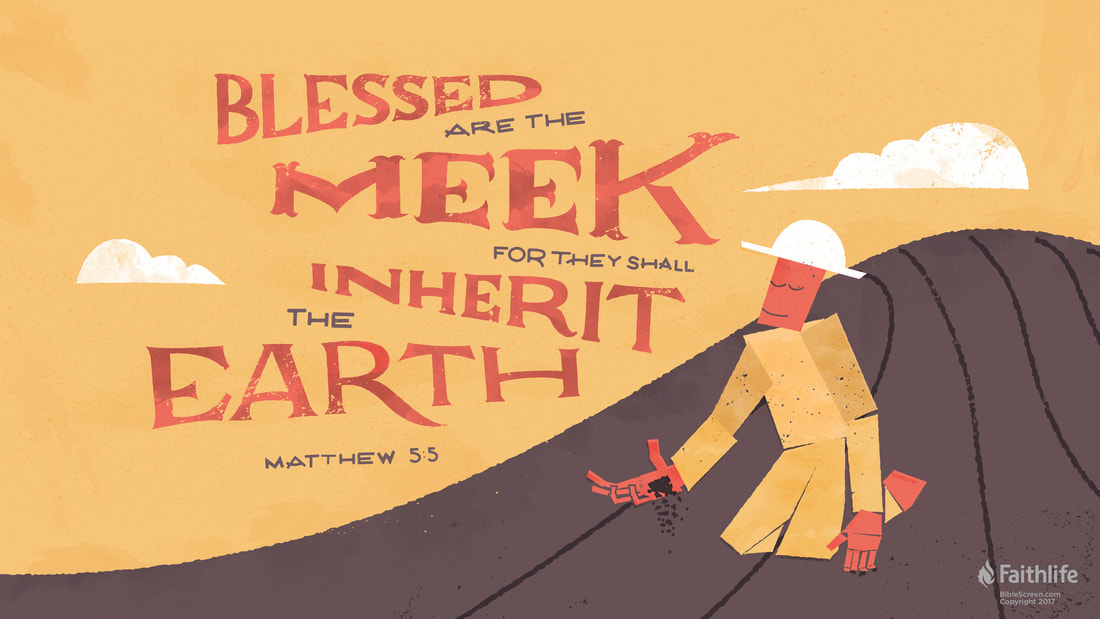
     I remember a sermon from my youth as a Christian that put forth a truth that challenged me and taught me something that has been a pillar of my spiritual life, an ongoing matter I have prayed over for my walk with the Lord over the years.  He taught me that there is a real difference between Meekness and Humility - not concerning their essence, but concerning their relationship to my heart, mind and conduct.
     Humility speaks to the way in which we view and think of ourselves.  Many people, including many believers suffer from the affliction and sinful attitude of pride to one degree or another.  They think of themselves wrongly and unBiblically, dishonoring God in the process.  Humility causes us to see ourselves as those who need the hand of God and the truth of The Scripture to teach us and lead us in living out spirituality before those around us and honoring God before men and society.
     Meekness speaks of how we are to be acting out the humility that God’s Word and God’s Spirit has built into us via Prayer and the study of His Word.  It is in this meekness that we demonstrate the can demonstrate and inherit the blessedness that Jesus spoke of in Matthew 5:5!  When we se ourselves, understanding ourselves rightly before God as needing His help and blessing that we are capable of walking Meekly and honoring Him!!
0 Comments

Romans 7:5 - The Fearsome Foursome

10/24/2019

0 Comments

 
​By Pastor Bill Farrow
“For while we were in the flesh, the sinful passions,
which were aroused by the Law,
​were at work in the members of our body to bear fruit for death.”
✧✧✧
     Four key terms characterize those who are not in Christ.
     In our fallen, cursed world, disasters are commonplace. Fires, floods, earthquakes, volcanic eruptions, hurricanes, tornadoes, and other natural disasters happen somewhere every day. Added to those natural disasters are the man–made ones, such as war, acts of terrorism, plane crashes, train wrecks, etc.
     But far greater than any of those disasters, and the one from which they all stem, was the entrance of sin into the human race. Sin renders fallen men spiritually dead, cuts them off from fellowship with God, and consigns them to eternal punishment in Hell.
     In today’s verse Paul introduces four words that describe man’s unregenerate state: flesh, sin, law, and death. Those four words are interconnected: the flesh produces sin, which is stimulated by the law, resulting in death. Let’s consider each one individually.
     The term flesh is used two ways in Scripture. It is sometimes used in a physical sense to speak of human existence. John used it to describe Christ’s incarnation in John 1:14 and 1 John 4:2. But in its moral sense, “flesh” represents the believer’s unredeemed body (Gal. 5:13; Eph. 2:3). While believers are no longer “in the flesh” (Rom. 8:9) as are unbelievers, the flesh is still in us. It is the seat of temptation, the beachhead from which Satan launches his attacks.
     ​Sin (or “sinful passions”) energizes the flesh, which in turn produces further sin. Those “sinful passions,” Paul says, “were aroused by the Law”; they are exposed by the law because fallen man’s rebellious nature makes him desire to do what is forbidden. The end result of this downward spiral is “death”—both physical and spiritual.
What a merciful God we serve, who “even when we were dead in our transgressions, made us alive together with Christ” (Eph. 2:5).
✧✧✧
Suggestions for Prayer: Pray for the unbelievers in your life, that God would open their hearts to respond to the gospel (Acts 16:14).
​

For Further Study: What do the following passages teach about the Christian’s relationship to the law—Romans 8:2–4; 10:4; Galatians 3:13; 5:18; Philipians 3:9. ✧ Does that mean believers can live as they please? (See 1 Cor. 9:21.)
0 Comments

October 22nd, 2019

10/22/2019

0 Comments

 
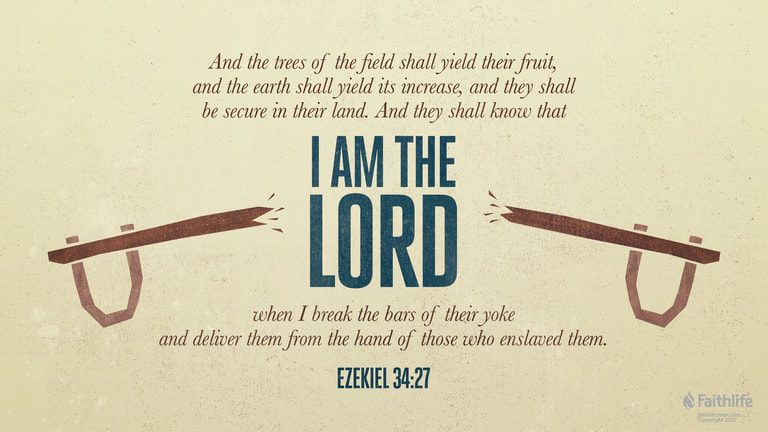
    A singularly important aspect of theology for all believers is the truth that Gos is sovereign and that all things will do as HE has designed and ordained for them to do.  It is also VERY clear that the reason that this is so is to demonstrate the truth of Who is that will do all that comes.  And there is a “bright” side of the matter... no matter how dark and bound up in sin and depravity God’s people become and how much time passes with them in that condition... God WILL break the bonds and He can and WILL deliver them.  I don’t know of any more wonderful and encouraging truth than this...either for Jew or Gentile!!!  He IS a God Who can and will!
Picture
0 Comments
<<Previous
Forward>>

    Archives

    October 2023
    June 2023
    May 2023
    April 2023
    March 2023
    February 2023
    January 2023
    December 2022
    November 2022
    October 2019
    July 2019
    February 2019
    January 2019
    December 2018

    Categories

    All

    RSS Feed

Site powered by Weebly. Managed by Bluehost