
Valley Forge Baptist Church
  • VFBC Home Page
  • Services/Events
  • Church Newsletter
  • Missions
  • VFBC Blog
  • Sermons & Teaching

God’s Blessed Faithfulmess!

10/21/2019

0 Comments

 
Picture
     It is legitmate and even essential to be mindful of the faithfulness of our God and Master. However, remembering that His faithfulness is really a function of the eternal relationship we have with Him in Christ and of His eternal nature and person and another truth that ought to encourage, thrill and lift us up!!
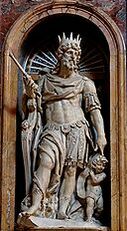
     In human beings there are many “conditions” that serve as conditioners for our “faithfulness” to another person or some outside thing or matter.  Likewise, there are things that can happen and/or take place to affect the continuing (or ceasing) of the matter at hand.  This wonderfully underscores what David observes here in Psalm 119 when he tells us that God’s faithful is not simply a matter of one person or one generation.  God faithfulness, as a demonstration of His person, His being and essence is a thing that affects any and all that come into the place of being affected by the Person and Being of God - He can be counted on and His promises and the exercise of His purposes can be relied upon as certainties to any and all for all times!

0 Comments

He That Waits on His Master Shall be Honored

10/16/2019

0 Comments

 
 - Pastor Bill Farrow
“Whoso keepeth the fig tree shall eat the fruit thereof: so he that waiteth on his master shall be shall be honored.” (Proverbs 27:18)
     As with many Proverbs, Solomon sets this one up with a very general application at the beginning.  “Anyone” who meets the condition that he lays out will reap the benefit he describes.  “Keep” speaks of the act of guarding, in a good sense (to protect, maintain, obey, etc.).  It is obviously to be seen here it the farming (or private gardening) context.  We ask the question “keeps” what?  Seems clear that solomon’s intention is to tell us that the one who tends properly and fully to the fig tree will reap the pleasure of good and tasty fruit; as the purpose of the tree is to begin with.  It seems sure that this would be an obvious conclusion to draw, to see when one would think about the matter.
     “So” means that this second phrase is to be seen as speaking in the same generalized fashion.  In the same fashion as attention to the gardening necessities of the Fig Tree yields wonderful fruit; so also the servants’ “waiting” on his Master will yield his (the servants’) being honored.  “Waiting” speaks of the act of hedging about (as with thorns), i.e. namely guarding; generally speaking of the act of protecting, attending to, etc.  In a non-literal sense it can speak of being circumspect, taking heed (to self), keeping yourself), preserving to an end.
     Solomon’s point seems to be that the servant pays due and careful attention to his Master reaps honor due such attention from that Master.
 
Interpretation. - The fig tree in Judaea is so abundant, that for its fruit to fail was a severe judgment (Joel 1:6, 7; Hab. 3:17). The diligent husbandman would have his reward in being partaker of its fruits (2 Tim. 2:6). Even so, the faithful servant who “guards or observes” his master, shall reap the fruits of his diligence in honor, confidence, reward, advancement - probably, if a slave, in his liberation. And this applies to the service of the heavenly even more than of an earthly master.
 
Illustrations.
  • Eliezer, Deborah, Joseph, the steward, the nurse, the slave, all attained to honor through faithful service (Gen. 24:12–15, 45, 50; 35:8; 37; 39; 41).
  • Elisha, who had persevered in watchful attendance on his master, was rewarded by a double portion of his spirit.
  • The centurion’s servant, and the devout soldier who waited on Cornelius continually, had each his reward in the attachment and good offices of those they served (Luke 7:2, 8; Acts 10:7, 24, 48).
  • Luke (whose day is sometimes kept in the various sides of the church) became St. Paul’s loving and beloved attendant even to the end of his afflictions (2 Tim. 4:11), and, in return, profited by his art of healing souls, derived from him aid in his immortal book as an Evangelist, had the privilege of constant communion with his spirit, and was honored in his own lifetime, as now, by his praise being in the Gospel, and by becoming (whether a slave or not) “the Lord’s free man” (1 Cor. 7:22).
 
Application. - Never let the humblest service be despised, for, if faithfully rendered, it shall have its reward, if not at the hands of man, yet of God. A good master will thoroughly appreciate and not forget to acknowledge the trusty watchful care of an attached servant. He will employ him confidentially, increase his wages, advance him to honor. Or if some earthly masters are strangely neglectful of what is due to their servants, not so the Master Christians delight to serve. Himself a pattern servant (of His own free will) to His Father, “faithful to Him that appointed Him” (Heb. 3:2), and therefore “highly exalted” (Phil. 2:9), there is no duty rendered Him on our part which He sees not, acknowledges not, crowns not. He demands no work but what is due; sends no one a warfare on his own charges; is large in His promises; smiles upon active fidelity. The most ordinary calling is a service to Him, however mean. The common task of daily life done “as unto the Lord” is the best proof of our love. From Him will our fruits be found (Hos. 14:8).
0 Comments

Liquid Prayers!

7/11/2019

0 Comments

 
Psalm 6:8
 - Charles Spurgeon

"The LORD has heard the voice of my weeping!" 

     Is there a voice in weeping? Does weeping speak? 
     In what language does it utter its meaning? Why, in that universal tongue which is known and understood in all the earth, and even in Heaven above. When a man weeps, whether he is a Jew or Gentile, Barbarian, Scythian, bond or free--it has the same meaning in it. 
     Weeping is the eloquence of sorrow. It is a wordless orator, needing no interpreter, but understood by all. 
Is it not sweet to believe that our tears are understood by God, even when words fail? 
Let us learn to think of tears as liquid prayers, and of weeping as a constant dropping of importunate intercession which will surely trickle its way into the very heart of divine mercy. 
     My God, I will "weep" when I cannot plead--for You hear the voice of my weeping.
CH Spurgeon
0 Comments

Yet He Saved Them For His Name’s Sake

7/10/2019

0 Comments

 
     What is imported in this “Yet,” in God’s saving notwithstanding?  The text is speaking of impediments on the sinner’s part. God saved Israel here, notwithstanding dreadful sins. God can save you with an everlasting salvation, notwithstanding the most grievous provocations that you have been guilty of and the greatest impediments that you have laid in the way.
​

by Minister Ralph Erskine
​

Yet he saved them for his name’s sake.
—Psalm 106:8​
  1. He can save for his name’s sake, notwithstanding grievous guilt and heinous transgressions. Thus his name is declared to be a God forgiving wickedness, rebellion, and sin. You see mercy courting you, notwithstanding this very objection.
  2. He can save for his name’s sake, notwithstanding long continuance in sin. Mercy follows you with many a “how long, how long”: “How long will these people treat me with contempt? How long will they refuse to believe in me?” (Num. 14:11).
  3. He can save for his name’s sake, notwithstanding many apostasies and backslidings. “Let the wicked forsake his way and the evil man his thoughts. Let him turn to the Lord, and he will have mercy on him, and to our God, for he will freely pardon” (Isa. 55:7).
  4. He can save for his name’s sake, notwithstanding enormous neglect and contempt of God until now. See Isaiah 43:25,
  5. “I, even I, am he who blots out your transgressions, for my own sake, and remembers your sins no more.”
  6. He can save for his name’s sake, notwithstanding grievous, rebellious hardness and contrariness.
  7. “He kept on in his willful ways. I have seen his ways, but I will heal him; I will guide him and restore comfort to him” (Isa. 57:17–18).
  8. He can save for his name’s sake, notwithstanding outward afflictions and poor circumstances in the world. Though you are an outcast and nobody cares for you, he may save you for his name’s sake, for he “gathers the exiles of Israel” (Isa. 56:8).
  9. He can save for his name’s sake, notwithstanding degradation, unworthiness, and pollution, for there is a fountain opened.
“On that day a fountain will be opened to the house of David and to the inhabitants of Jerusalem, to cleanse them from sin and impurity” (Zech. 13:1).

—Minister Ralph Erskine
0 Comments

The Lord’s Voice of Authority

2/6/2019

0 Comments

 
Pastor Bill Farrow
     I have sometimes heard pastors (or others who call themselves ‘spiritual authorities) say something like, “You need to learn to listen to the voice of God. You need to be tuned in so you can hear His still, small voice.” Author Sarah Young, for instance, makes a this kind of claim in “Jesus Calling” - her bestselling devotional based on various messages she ‘claims’ to have received from Christ. As she presumptuously writes in the Lord’s voice, she dispatches the following instructions.
     Wait quietly in My presence while My thoughts form silently in the depths of your being. Do not try to rush this process, because hurry keeps your heart earthbound. I am the Creator of the entire universe, yet I choose to make my humble home in your heart. It is there where you know me most intimately; it is there where I speak to you in holy whispers. Ask My Spirit to quiet your mind so that you can hear My still, small voice within you. [1]
     I truly have no idea what that actually means. But I do know that God does not mumble. He doesn’t whisper gentle niceties into the ears of His people. When the Lord speaks to His church, it is unmistakable. His voice thunders over the church through the divine authority of Holy Scripture.
     That was the sound the apostle John heard on the island of Patmos. He writes, “And His voice was like the sound of many waters” (Revelation 1:15). There are no soft, sandy beaches on the Isle of Patmos, no gentle, soothing tide. During a storm, the waves crash against the rocks with a deafening roar. That violent, arresting sound was how John described the voice of the Lord. It’s an echo of Ezekiel 43:2, affirming that Christ and the Father speak with the same thundering voice of authority over the church.
     John had heard this voice before. At Christ’s transfiguration, the voice of God rang out, saying, “This is My Son, My Chosen One; listen to Him!” (Luke 9:35). One of the defining characteristics of believers is that they recognize the authority of Christ and obey His Word: “My sheep hear My voice, and I know them, and they follow Me” (John 10:27).
     The reason the sheep follow the Shepherd is because they know His voice. Actual sheep recognize the voice of their own shepherd and will not respond to another. Philip Keller writes:
The relationship that develops between a shepherd and the sheep under his care is to a definite degree dependent on the use of the shepherd’s voice. Sheep quickly become accustomed to their owner’s particular voice. They are acquainted with its unique tone. They know its peculiar sounds and inflections. They can distinguish it from that of any other person. If a stranger should come among them, they would not recognize nor respond to his voice. [2]
     True believers will heed the Good Shepherd’s voice and reject the overtures of false shepherds. Submitting to the authority of Christ is fundamental to the life of faith: “If you love Me, you will keep My commandments” (John 14:15).   
[1]      Sarah Young MacArthur, Jesus Calling Special and Revised edition (Nashville, TN: Thomas Nelson, 2004), 276.
[2]​     
Philip Keller, A Shepherd Looks at the Good Shepherd and His Sheep (Grand Rapids, MI: Zondervan, 1979),
​39–40.
0 Comments

There are 'Jebusites' in Every Christian Heart!

1/28/2019

0 Comments

 
Pastor Bill Farrow
2 Samuel 5:6
"The king and his men marched to Jerusalem,
​to fight against the Jebusites who inhabited the land."
Picture
     The Jebusites still held a stronghold in the heart of the country, never having been dislodged. Just so, there are 'Jebusites' in every Christian heart!
     In every heart, there are little 'Jebusite strongholds', which it seems impossible for us to conquer. Sometimes it is a secret sin which lives on, unconquered, amid the general holiness of a life. Sometimes it is a remnant of the old nature--such as pride, worldliness, selfishness, lust, or bitterness. There are many other such citadels of evil, which rear their proud towers and defy conquest.
     "We all have our faults!" we say, and under this cloak we manage to tuck away a large number of dear idols that we do not want to give up!
     ​We ought to give attention to these unsubdued parts of our life--that every thought, feeling, and temper may be brought into subjection to Christ. It is perilous to leave even one such unconquered stronghold in our heart!

"If your eye causes you to sin, gouge it out and throw it away. It is better for you to enter life with one eye than to have two eyes and be thrown into the fire of Hell!" Matthew 18:9
"For if you live according to the sinful nature, you will die; but if by the Spirit you put to death the evil deeds of the body, you will live." Romans 8:13 
"Put to death, therefore, whatever belongs to your earthly nature: sexual immorality, impurity, lust, evil desires and greed, which is idolatry. Because of these, the wrath of God is coming. You used to walk in these ways, in the life you once lived." Colossians 3:5-7
0 Comments

36 Purposes of God in Our Suffering

1/14/2019

0 Comments

 
Pastor Bill Farrow
Picture
          When difficulties, trials, and suffering come in our lives, often the first question we ask is, "why?" How could God allow this? Why does God allow suffering at all? Could there be any purpose in suffering?
          Joni Eareckson Tada knows hardship firsthand and shares her experiences and reflections on suffering in many of her books. The following is an appendix from her book When God Weeps: Why Our Sufferings Matter to the Almighty.

          To read this post in its' entirety click the link below...
36 Purposes of God in Our Suffering
0 Comments

Worthy Examples to the World

1/11/2019

0 Comments

 
 “Let love of the brethren continue” (Hebrews 13:1).
     To be a testimony to the world, Christians need to live what they profess.
     The nineteenth-century preacher Alexander Maclaren once said, “The world takes its notion of God most of all from those who say they belong to God’s family. They read us a great deal more than they read the Bible. They see us; they only hear about Jesus Christ.” Sound biblical doctrine, as important a foundation as it is, is inadequate by itself to influence the world toward Christ’s gospel. 
To read this post in its' entirety, click the link below:
Worthy Examples to the World
0 Comments

What Kind of Hearer Are You?

1/10/2019

0 Comments

 
Pastor Bill Farrow
Genesis 18–19:29; Matthew 13:1–43; Ecclesiastes 4:1–7
     While parables were often told to make truth tangible, in Matt 13, we find that this wasn’t always the case. When His disciples question why He speaks in parables, Jesus quotes the prophet Isaiah:
“For the heart of this people has become dull, and with their ears they hear with difficulty, and they have shut their eyes, so that they would not see with their eyes and hear with their ears and understand with their heart and turn, and I would heal them” (Matt 13:15).
     This is the case in the parable of the Sower and the Seed. The seed hits the open path, the rocky ground, the thorns, and the good soil, and Jesus describes four hearers who receive the good news in different ways. We should examine this parable and ask ourselves, “What kind of hearer am I?”
     Do we seek to really understand the gospel? When we hear it told again and again, does it merely lie on the surface as commonplace? When our faith is put to the test, do we find ourselves putting hope in everything else but the good news? Or, when we become anxious about the cares of this world, do we find ourselves grasping for a firm foundation that isn’t there?
     The seed that falls on the good soil describes a completely different reception. This hearer receives the word and “hears it and understands it.” It doesn’t stop there, however. The hearer is also known for his good works, which display a heart that has been changed. These hearers bear fruit according to what they have been given:
“But what was sown on the good soil - this is the one who hears the word and understands it, who indeed bears fruit and produces, this one a hundred times as much, and this one sixty, and this one thirty” (Matt 13:23).
     ​Jesus emphasizes that the pursuit of Him isn’t lethargic, or merely emotional, and it isn’t cerebral. It involves pursuing Him with all of our being—in a posture of humility, with an ear that hears and a life that is changed. It involves complete surrender to His will.
     What is your posture before God? Do you come with humility—ready to hear the good news?
0 Comments

Our Triune God

1/8/2019

0 Comments

 
     One of the most often given questions that I hear as I bear witness to people AND as I read the comments of folks on the various social media vistas around is "Haven't we just invented God for our own purposes?".  The fact of the matter is that the Scripture is very, very clear about God's genuine existence and about His nature as He moves in His world to reveal Himself to us...Let's think about this manner of revelation available to all those who are seeking Him for a bit...to read more about this idea - click the link below:
Our Triune God
File Size: 392 kb
File Type: pdf
Download File

0 Comments
<<Previous
Forward>>

    Archives

    October 2023
    June 2023
    May 2023
    April 2023
    March 2023
    February 2023
    January 2023
    December 2022
    November 2022
    October 2019
    July 2019
    February 2019
    January 2019
    December 2018

    Categories

    All

    RSS Feed

Site powered by Weebly. Managed by Bluehost